
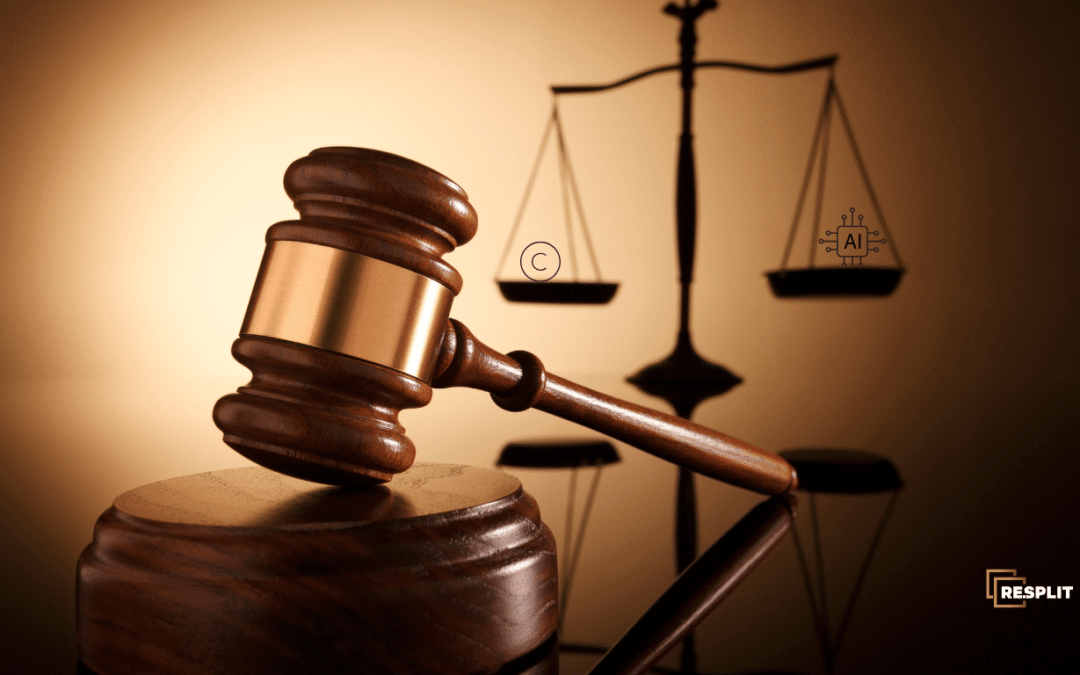
Artificial intelligence is driving innovation, but also legal storms. The latest news comes from San Francisco, where AI company Anthropic agreed to pay $1.5 billion to authors in order to settle a lawsuit over the use of pirated books in training its models. This agreement sets a historic precedent and raises a key question: how do we align the development of AI with respect for copyright?
What happened?
Anthropic, known for its AI chatbot Claude, became the focus of a legal dispute when authors Andrea Bartz (We Were Never Here), Charles Graeber (The Good Nurse), and Kirk Wallace Johnson (The Feather Thief) filed a class action lawsuit last year. They argued that the company, backed by Amazon and Alphabet, used millions of pirated books to train its AI assistant, turning the spotlight on one of the biggest challenges in the debate over AI and copyright.
Their allegations echoed dozens of other lawsuits filed by writers, publishers, news outlets, and visual artists worldwide. All with the same concern: tech companies should not steal creative work to train AI models, raising urgent questions about how AI and copyright can coexist.
Legal background: the thin line between AI and copyright
This settlement drew so much attention because it highlights a critical legal gray area. A U.S. court had previously ruled that training AI models on copyrighted works can in some cases fall under “fair use”. In other words, AI may learn from creative works if companies legally purchase or license the content.
The real issue in this case was not the training itself, but the way they obtained the data. Downloading pirated copies of books, storing them, and using them on a massive scale without consent. That is what the court found unacceptable. The line is now clearer than ever: AI can learn, but not on stolen resources.
Settlement details
- Covers around 500,000 books.
- Authors to receive approx. $3,000 per work.
- Total amount could grow if more works are identified.
- Anthropic committed to delete pirated datasets and stop using them.
This is the largest copyright-related settlement in U.S. history and the first major resolution of a conflict between authors and an AI company.
What does this mean for AI and copyright?
This case sends a clear message: AI companies can no longer ignore copyright law. Some of the consequences:
- Higher costs for AI training – companies will need to pay for licenses or create their own lawful datasets.
- Dataset transparency – public and regulatory pressure will force companies to explain where their data comes from.
- New business models – authors and publishers may start earning through licensing deals for AI training.
- More lawsuits ahead – this opens the door to similar cases against other major AI players like OpenAI, Meta, or Google.
Broader debate: balancing innovation and copyright
The debate about balancing technological innovation and copyright is entering a new stage. The AI industry insists that progress requires open access to vast amounts of data. Creators argue that their intellectual property is the foundation of their livelihood.
If AI trains on books, images, and music without consent, isn’t that just another form of piracy? But if companies have to license every piece of data individually, will innovation slow down and become too expensive?
Instead of free-for-all access or total restriction, the future could bring a licensing system similar to the music industry. In music, artists and authors receive royalties every time their work is used through streaming platforms, radio, or live performances. Collective rights organizations track usage and distribute payments. For AI, this could mean companies paying monthly licenses for access to certain datasets or per-use fees. Funds would be distributed back to the authors whose works are included.
Such a system wouldn’t just ensure fair compensation for creators. It would also give the AI industry a stable, lawful foundation for further growth — a compromise that builds a bridge between innovation and author protection.
Conclusion
The $1.5 billion settlement between Anthropic and authors shows that the AI industry is entering a new era of accountability. Innovation can no longer come at the expense of those whose work lies behind the technology.
For everyone following the evolution of artificial intelligence, this is a signal that the future will bring stricter rules, greater transparency, and new partnerships between AI companies and content creators. The future of AI will depend not only on what is technically possible, but also on what is legally and ethically acceptable.